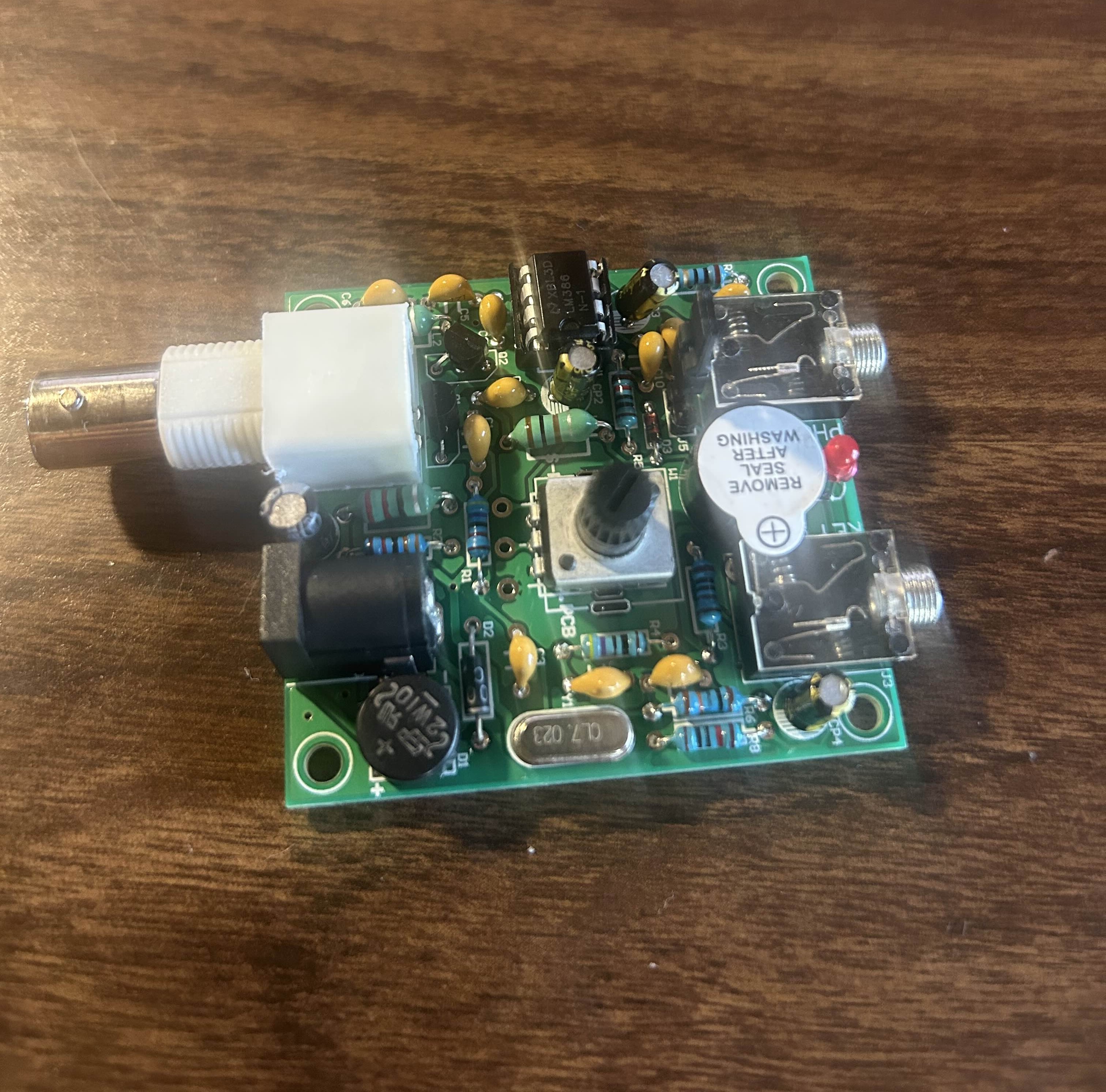
Overview
Through participation in an electronics workshop, I assembled a Pixie QRP (low-power) radio transceiver kit, gaining practical experience with precision soldering and RF circuit construction. The build process involved methodically placing and soldering discrete components including precision resistors, ceramic capacitors, bipolar transistors, and wound inductors onto the printed circuit board according to detailed schematics.
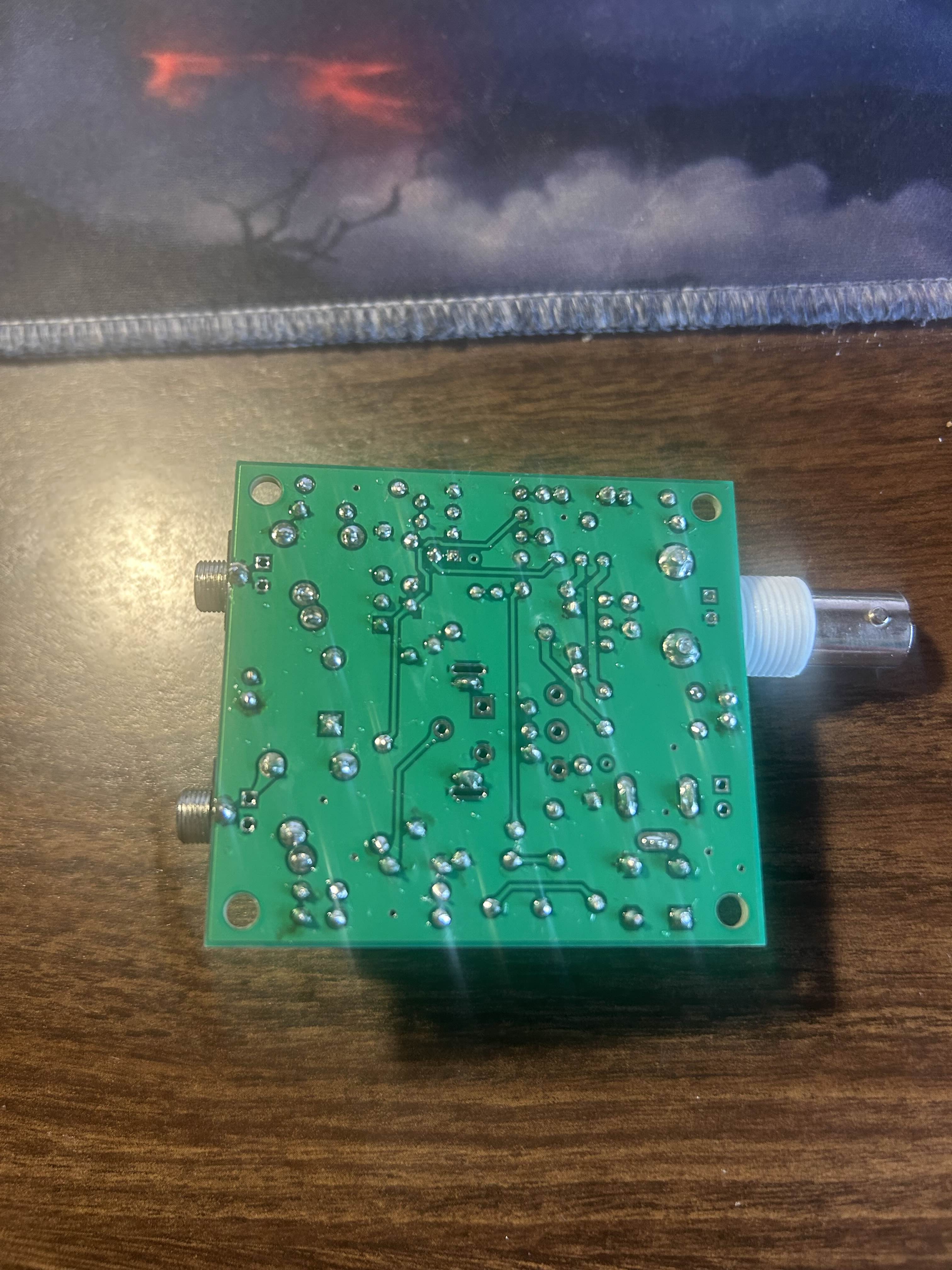
Bottom view showing solder joints and component placement
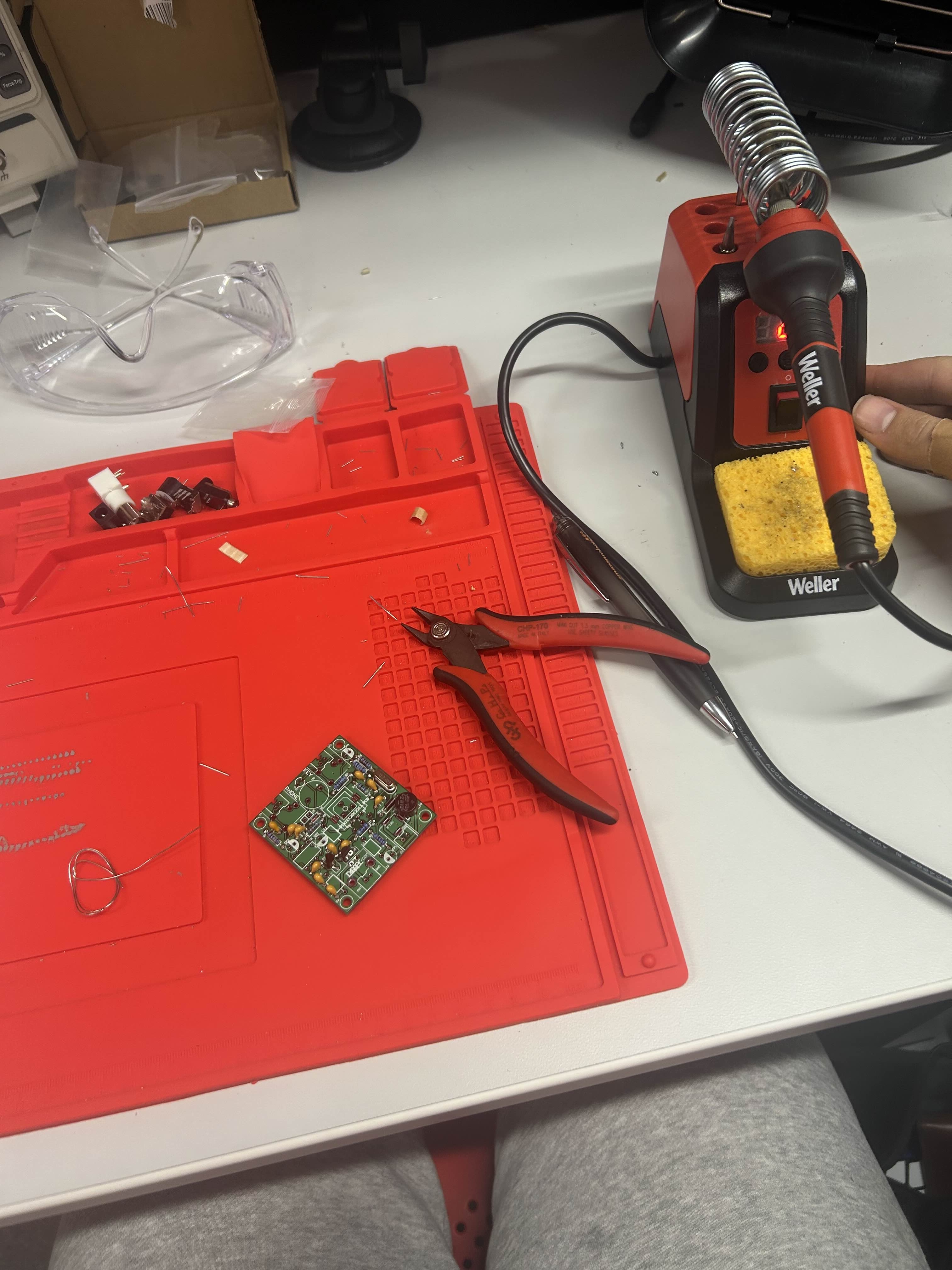
Assembly progress and component organization
Assembly Process
Each component placement required careful attention to polarity, thermal management during soldering, and verification of electrical continuity. The most valuable aspects of this project were learning to avoid common soldering issues like cold joints and solder bridges, improving the quality and reliability of my solder connections, and working with temperature-sensitive components that required careful heat management during assembly.
Technical Learning
The completed transceiver operates on amateur radio frequencies and demonstrates fundamental principles of amplitude modulation, signal generation, and radio wave propagation. Beyond the technical assembly skills developed, this project reinforced theoretical concepts from my electronics coursework through direct hands-on application, while also enhancing my ability to troubleshoot and verify circuit functionality using multimeter measurements and signal testing.
Challenges & Solutions
Component Identification
Some of the smaller components had color-coded markings that were difficult to interpret under workshop lighting.
Solution: I created a reference sheet with component values and used a multimeter to verify resistor values before soldering to ensure correct placement.
Temperature-Sensitive Components
The PCB and some components required careful heat management to avoid damage during soldering.
Solution: I used appropriate temperature settings and minimized dwell time on sensitive components, allowing cooling periods between adjacent solder joints.
Results
The completed radio successfully demonstrates the principles of RF communication and provided valuable hands-on experience with electronic assembly techniques. This project enhanced my troubleshooting skills and attention to detail while working with small electronic components, skills that are directly applicable to other embedded systems projects.