Overview
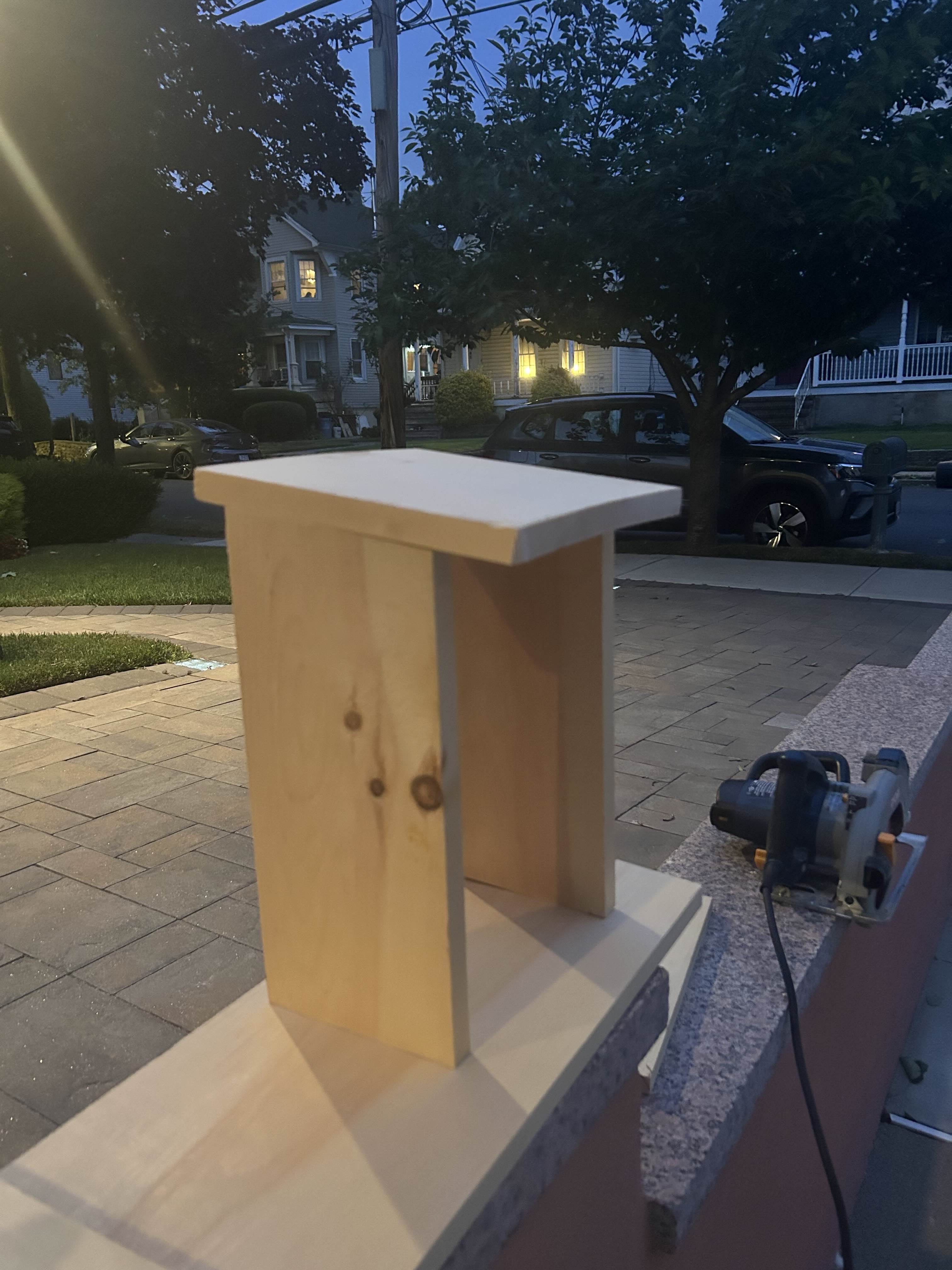
This project combines traditional woodworking with modern IoT technology to create an intelligent wildlife monitoring solution. I've completed the custom cedar feeder structure and built the frame, but the project is currently on hold due to several technical challenges that need to be addressed before deployment. The initial design had power supply issues, weatherproofing concerns, and image quality problems that made it unsuitable for long-term outdoor use.
Design inspiration and reference example
Initial design sketches and measurements
Physical Construction (Completed)
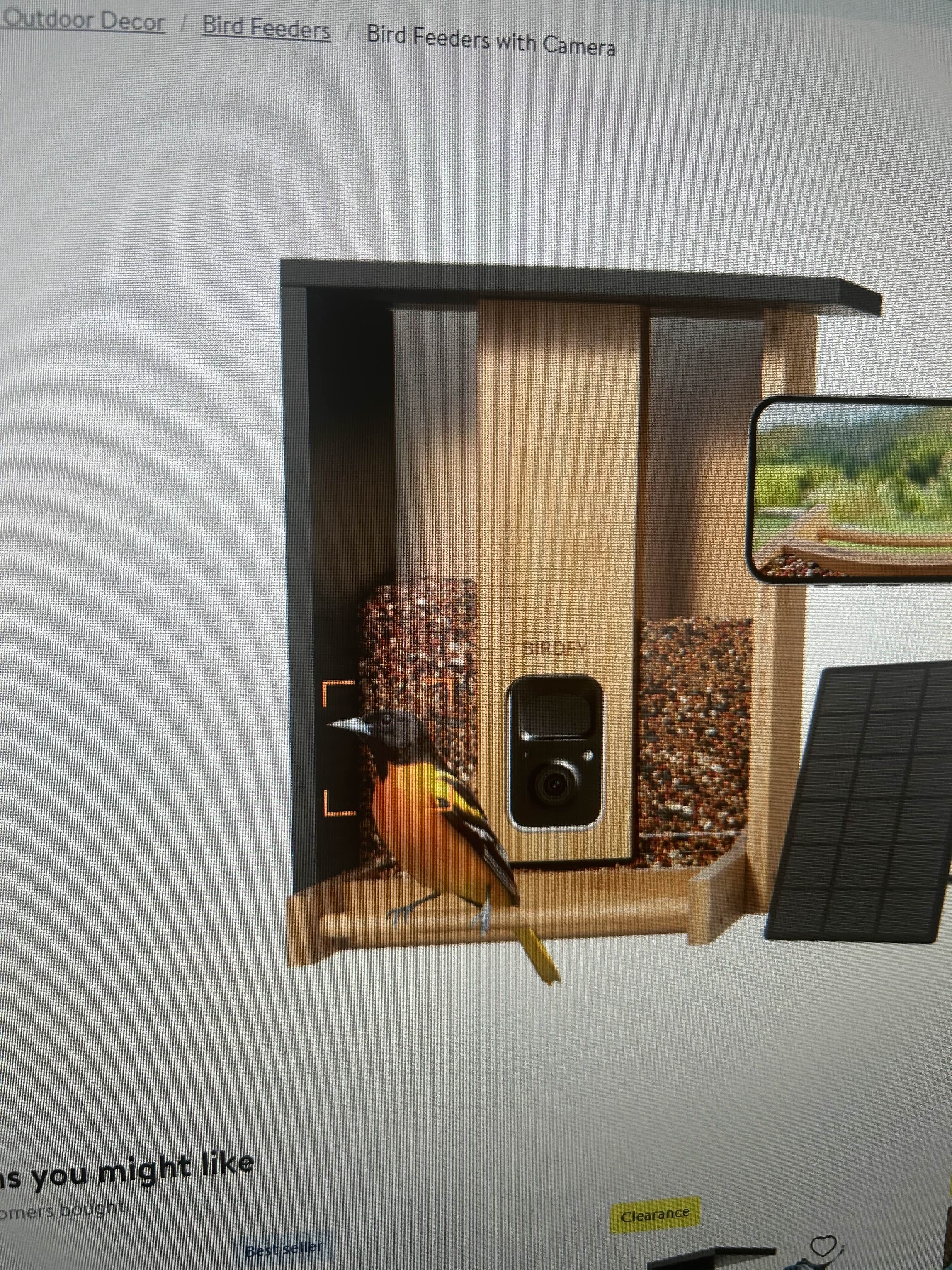
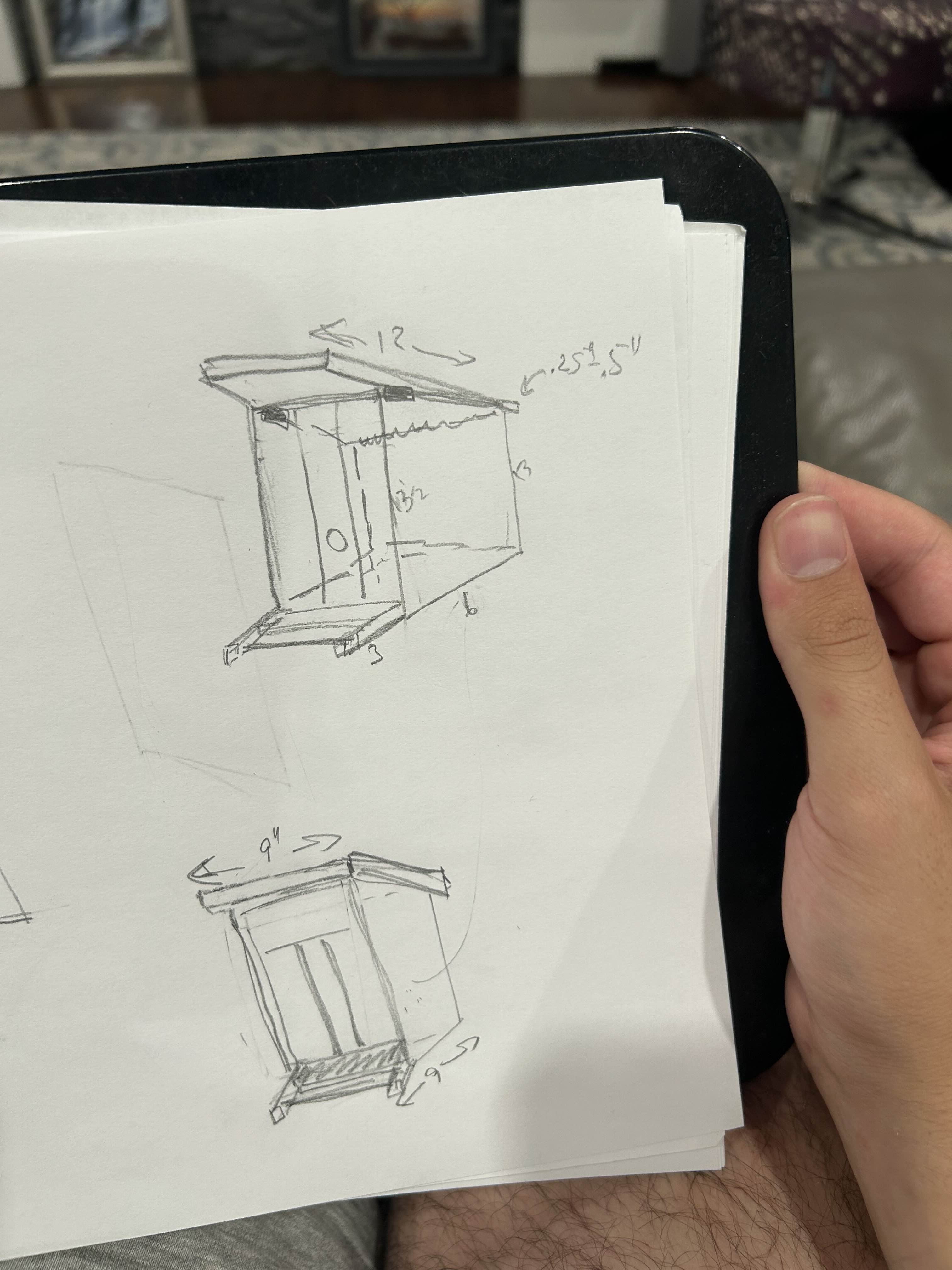
The woodworking phase involved selecting appropriate materials that would withstand outdoor conditions while providing adequate space for the electronic components. I chose cedar for its natural weather resistance and aesthetic appeal. The design incorporated a hinged roof for easy maintenance access and strategically placed openings for the camera lens and motion sensor.
The construction process required careful planning to integrate electronics into the wooden structure. I created modular mounting points that can accommodate different microcontroller configurations, ensuring the design remains flexible for future iterations.
Electronic System Development (Incomplete)
My initial approach centered around a Raspberry Pi coordinating between the motion sensor and camera module. I successfully implemented the basic functionality - PIR sensor triggering photo capture with timestamps - but several critical issues emerged during testing that prevented completion. The Raspberry Pi's power consumption was too high for reliable outdoor operation, and the camera I purchased was disappointingly blurry. Additionally, the weatherproof box I initially designed wasn't weatherproof enough for long-term outdoor deployment.
Motion Detection
PIR sensor detects infrared changes from bird visitors. This part worked well in initial testing, with good sensitivity to bird-sized movements while filtering out most false triggers.
Power Supply (Needs Redesign)
Raspberry Pi power consumption was too high for battery operation. For the next iteration, I'm considering adding a small solar panel to help with charging and make the system more self-sufficient. This would eliminate the need for frequent battery changes or power cables.
Weatherproofing (Major Challenge)
This is one of the hardest parts of the project and is not finished. The initial weatherproof box design wasn't sufficient for long-term outdoor deployment. I'm planning to use tightly sealed components and silica gel or similar desiccants to drain any remaining moisture that makes it in.
Software Development Progress (Partial)
I developed initial Python scripts for the Raspberry Pi implementation that successfully handled basic functionality. The system could detect motion, trigger photo capture, and log events. However, the power-hungry nature of running a full Linux system continuously made this approach impractical for outdoor deployment.
Completed software development includes:
- Functional PIR sensor interrupt handling (working)
- Basic camera control and timestamping (working but poor image quality)
- File management for local photo storage (working)
Future development planned for next iteration:
- ESP32-based system with lower power consumption
- WiFi-based notification system
- Power management and sleep modes
Technical Challenges & Lessons Learned
Power Consumption Issues
The Raspberry Pi consumed far more power than anticipated, making battery operation impractical and requiring frequent manual charging or permanent power cables.
Next Approach: ESP32 uses significantly less power and can operate efficiently on solar power with proper power management and sleep modes between motion events.
Image Quality Problems
The Raspberry Pi camera module produced consistently blurry images, making it difficult to identify bird species or capture quality wildlife photos.
Next Approach: Researching higher-quality camera modules compatible with ESP32, with better autofocus and image stabilization capabilities.
Weatherproofing Concerns
Initial weatherproofing attempts were not sufficient for long-term outdoor deployment, with concerns about humidity and water infiltration affecting electronics.
Next Approach: Complete redesign of the waterproofing system with better seals, drainage, and component protection to handle rain and humidity long-term.
Current Status & Lessons Learned
While the physical feeder structure is complete and functioning well for feeding birds, the electronic monitoring system is not finished. The project was at a point where it wouldn't last long-term, and I felt it wasn't worth putting up in its current state, so I immediately returned to the drawing board for prototype 2.
The project has been educational in demonstrating the gap between initial design concepts and real-world implementation challenges. The experience highlighted the importance of thorough component evaluation and environmental testing before full deployment.
Future Plans
The modular design of the wooden structure allows for electronic upgrades without requiring reconstruction of the feeder itself. The project is currently on hold while I focus on other priorities, but the foundation is solid for future development when I have time to address the power, camera, and weatherproofing challenges.