Overview
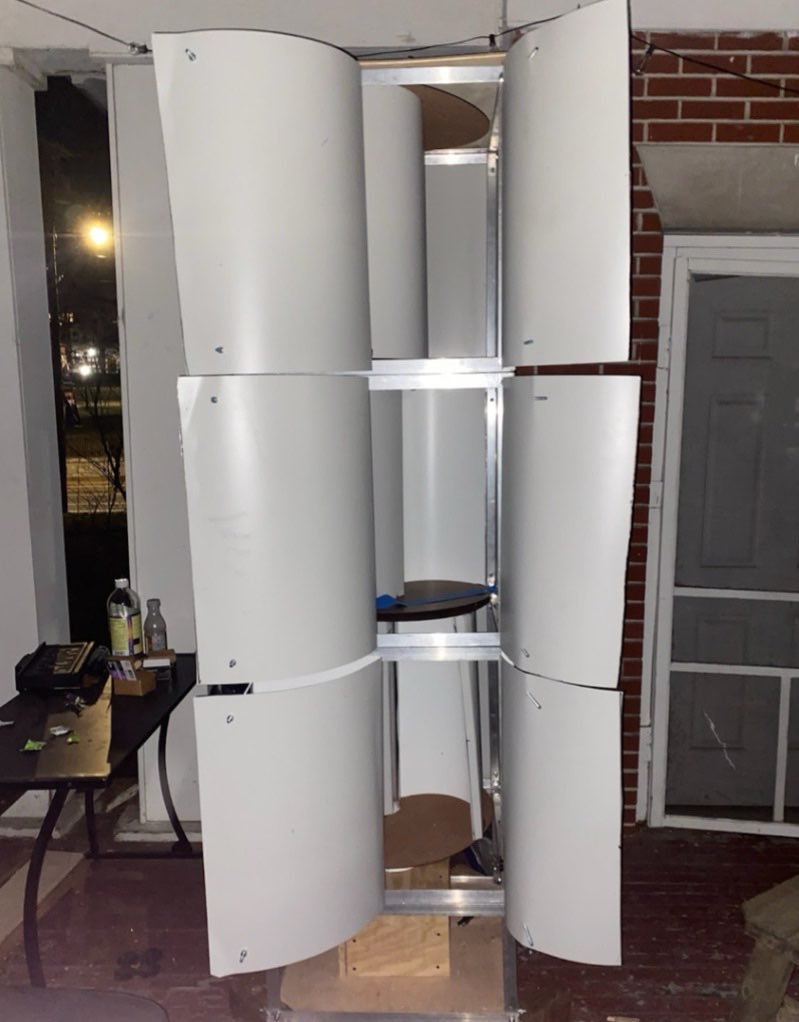
During my research with Polymathic Innovations, I was given the task of managing all electronics on the Savonius vertical-axis wind turbine. Working with one other student, we designed the voltage collection and storage system, consisting of a small generator and regulator connected to a 12V battery. I also soloed the task of setting up a sensor system to measure wind speed and direction, RPM, and voltage/current output.
First prototype and testing board
Turbine completed prototype
System Architecture
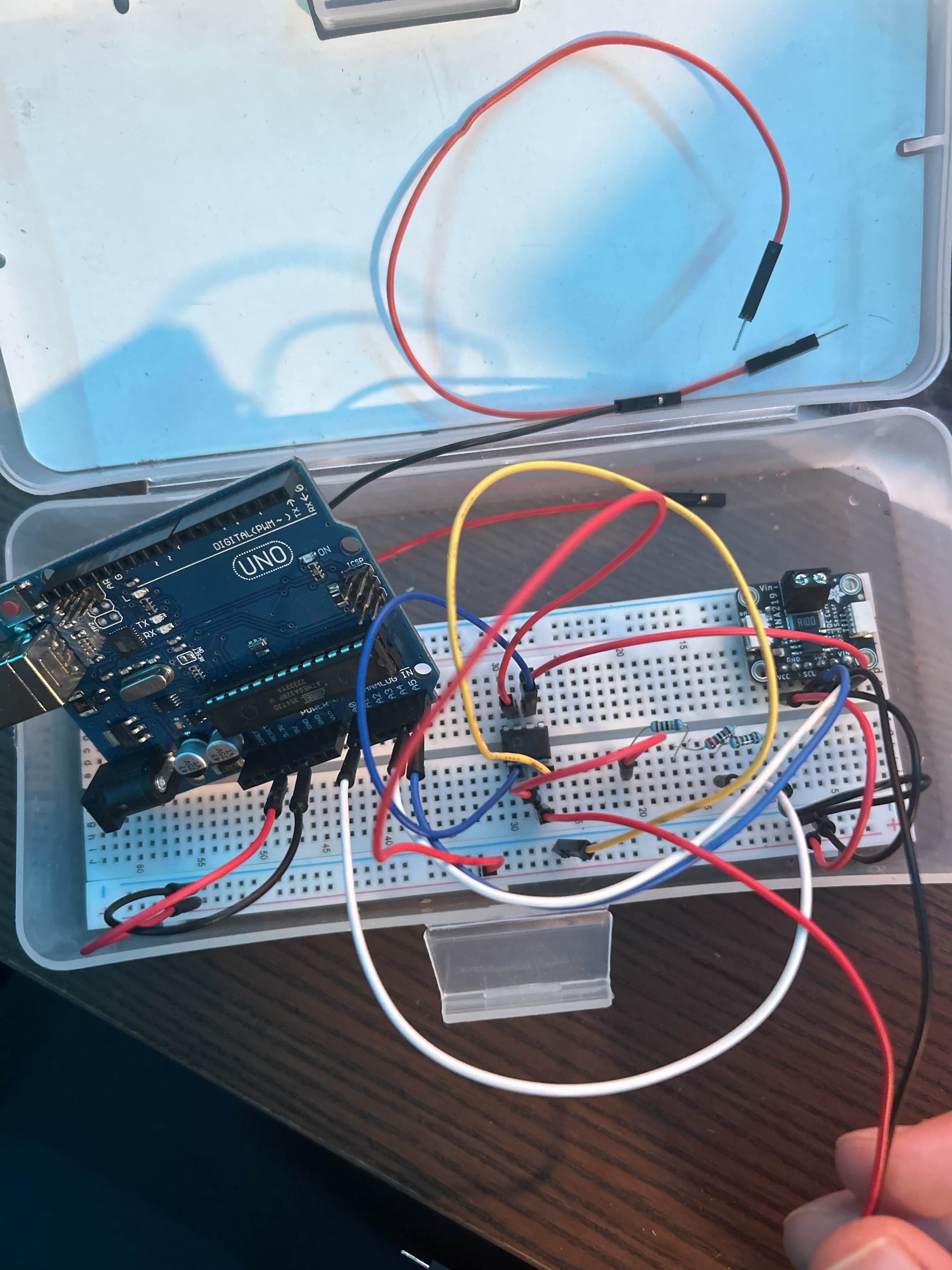
Various iterations of the system used Raspberry Pis, ESP32s, Arduino Unos, and STM development boards. Each board had its own pros and cons: For example, the Arduino Uno has data streamer functionality with Excel, allowing it to directly print terminal outputs into an Excel spreadsheet. However, the max input voltage on input pins was 5V, unlike the STM Development board which supported a direct 12V input for testing. All variations of the system had the same goal. The system monitored performance parameters of the turbine, logging metrics through various mediums for analysis. This data allowed us to test various orientations and designs, which ultimately resulted in a 15% improvement in overall efficiency.
Development Process
Initial Assessment
The project began with evaluating the existing turbine prototype and identifying key performance metrics that needed monitoring. We determined that RPM, wind speed, wind direction, and power output were the critical parameters to track.
Sensor Selection & Integration
I researched and selected appropriate sensors for each metric, including hall effect sensors for RPM measurement, anemometers for wind speed, wind vanes for direction, and voltage/current sensors for power output. Each sensor required custom mounting solutions to ensure accurate readings without affecting turbine performance.
Microcontroller Testing
I experimented with different microcontroller platforms to find the best solution for our specific requirements. Each platform required different approaches for sensor interfacing, data processing, and output formatting.
Software Development
I developed firmware for various microcontrollers to handle real-time sensor reading and data logging. The Arduino Uno version included Excel integration, while other platforms used different data export methods for analysis.
Testing & Optimization
Using the collected data, our team tested various turbine orientations and design modifications. We iteratively improved the system based on performance metrics and environmental conditions.
Technical Challenges
Environmental Protection
Electronic components needed protection from outdoor weather conditions.
Solution: I built simple enclosures to protect the sensors and data collection hardware from rain and dust exposure.
Microcontroller Compatibility
Different microcontrollers had varying voltage requirements, built-in features, and programming approaches.
Solution: I systematically tested each platform, documenting the specific requirements and capabilities to determine the best fit for each application.
Sensor Calibration
Some sensors, including the three-cup wind speed sensor, arrived without calibration documentation.
Solution: I developed custom calibration procedures using reference equipment like anemometers and controlled testing with tools like leaf blowers to derive characteristic equations.
One challenge we ran into was that the wind speed sensor we ordered came without any calibration guide. We were able to derive the characteristic equation for it with a leaf blower and an anemometer.
Results and Personal Growth
This project was super interesting and I learned a lot throughout it. This was my first time setting up microcontroller sensor solutions outside of a classroom, without guidance and structure. I ran into problems constantly, especially as I swapped between boards. Some had built-in pull-up resistors, and others didn't. By the time my systems worked, I felt a lot more comfortable using microcontrollers for various purposes - since this project, I've done several other small microcontroller projects, including the Smart Birdfeeder (also featured).
Our project was also relatively successful. As a project that had minimal funding and did our best to scrap together a functional wind turbine, we achieved about 16% efficiency - which is quite high for a Savonius wind turbine. We were able to take our project and pitch it, and secured more funding for additional research in future semesters.